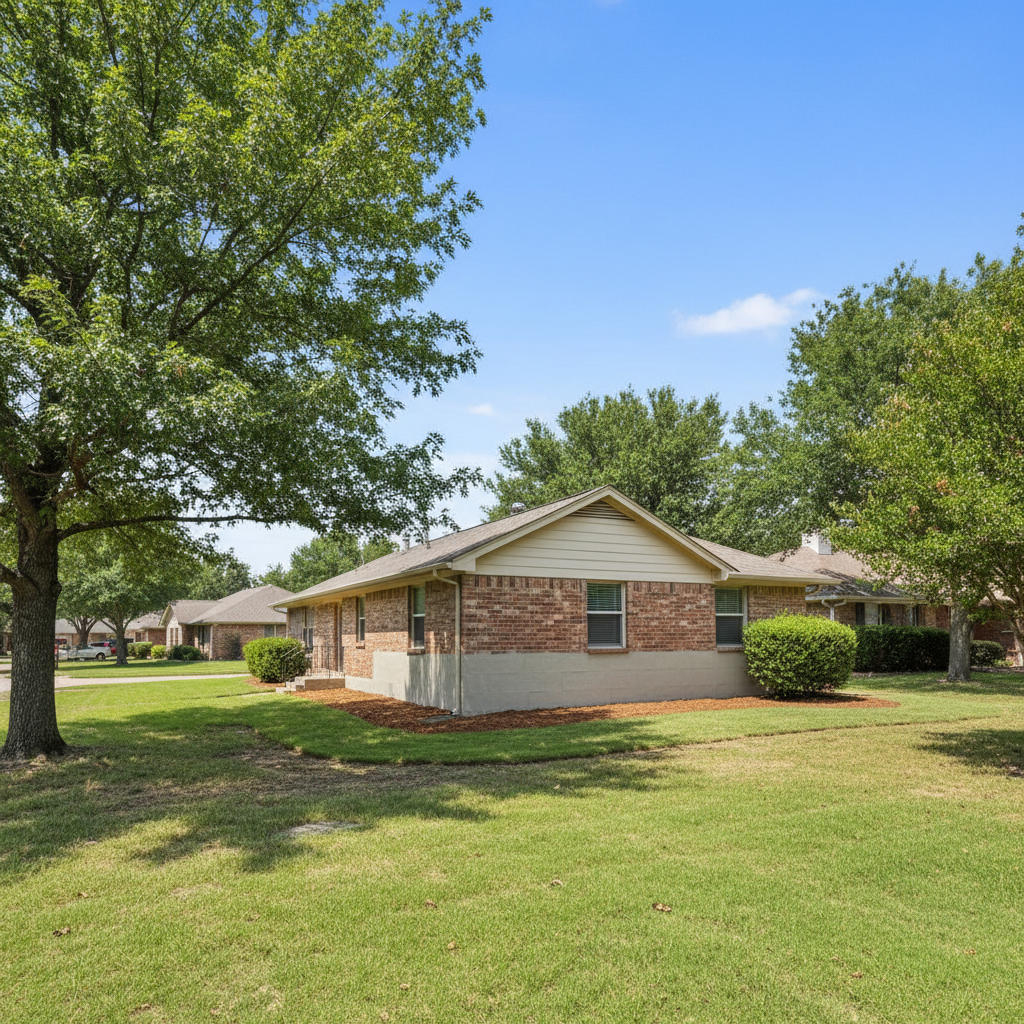
Basements are rare in Grand Prairie, but some older homes and custom builds around the area actually have them. Many people think basements do not exist around here because of shallow frost lines and heavy clay soils. However, when you find a subterranean level near Joe Pool Lake or off Carrier Parkway, managing moisture and temperature is a completely different process.
Dealing with below-grade insulation is not like installing fiberglass batts between standard wall studs. Here in North Texas, the ground stays relatively cool for part of the year. The moment our summer humidity spikes, warm air hits those cool concrete foundation walls and creates condensation. If you do not handle that thermal break properly, you will see mold growth and warped framing in a short amount of time.
Why Standard Insulation Fails Below Grade
Many do-it-yourself jobs feature rolled pink fiberglass placed directly against a concrete basement wall and covered with drywall. After one heavy rainstorm and a typical North Texas spring, that setup becomes a soggy mess. Concrete breathes and absorbs moisture from the surrounding soil. When moisture gets trapped behind vapor-permeable materials, it has nowhere to go.
- Concrete walls require materials that stop moisture transfer completely.
- Standard batt insulation loses all its R-value the second it gets damp.
- Proper sealing stops humid air from condensing on cold foundation surfaces.
Oasis Insulation usually points homeowners toward closed-cell spray foam or rigid foam board systems for these applications. Closed-cell foam acts as both a very strong thermal insulator and a built-in vapor barrier. Oasis Insulation seals every crack and crevice tight against the foundation stone or poured concrete.
Tackling Humidity and Airflow
Temperature control down below requires keeping outside air from leaking in. Our local weather swings from freezing winter northers to blistering 100-degree summer days, but underground temperatures stay fairly stable. The real enemy is the dew point. If warm, moisture-laden air finds a way through unsealed gaps, it condenses instantly against the cooler subterranean masonry.
When Oasis Insulation works on basement retrofits across the area, our team looks at the entire thermal envelope. You cannot just insulate the walls and ignore the rim joists, which are the wooden cavities right at the top of the foundation wall where the house framing starts. Air leakage through unsealed rim joists lets outside heat pour right into your basement.
Getting this work done means your basement stays comfortable year-round without smelling musty or driving up your electric bill. For homeowners in Grand Prairie, Oasis Insulation is here for all your Insulation Contractor needs to get your lower level sorted out right.