So, you're thinking about blown-in insulation, huh? Good call. It's one of the best ways to keep your home comfortable and your energy bills down, especially with our Grand Prairie summers that just don't quit. But when folks start looking into it, they often hear about two main ways we put that stuff in: loose-fill and dense-pack. They're both blown-in, but they're not the same, and knowing the difference can save you a headache and some cash down the road.
Loose-Fill Blown-In Insulation
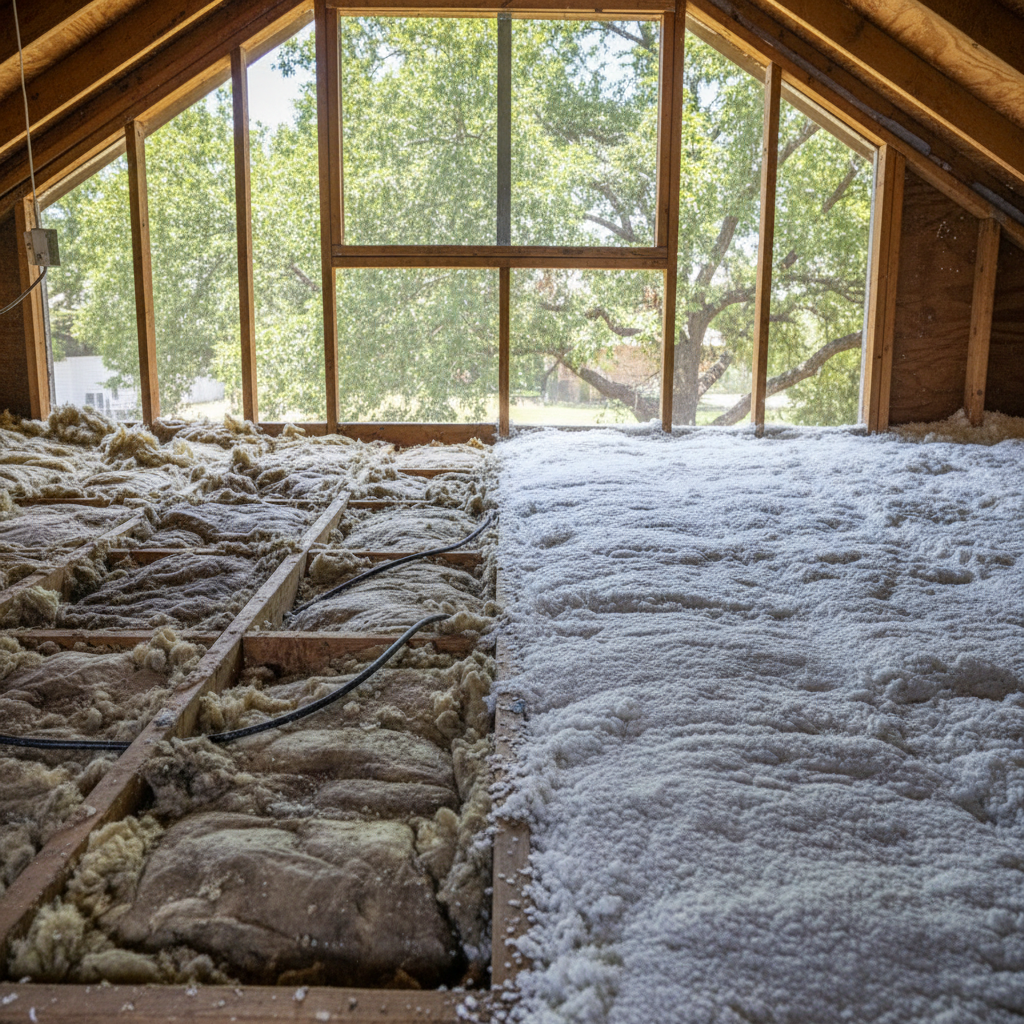
This is probably what most people picture when they hear 'blown-in insulation.' We use a big hose to blow insulation material – usually fiberglass or cellulose – into an open space, like an attic floor. It settles down, creating a fluffy, uniform layer. Think of it like a big, soft blanket covering everything up there.
Cost: Generally, loose-fill is the more affordable option upfront. It's quicker to install in open attics because we're just filling a big space, not trying to pack it into tight cavities.
Installation: Pretty straightforward for an open attic. We just blow it over the existing joists and between any obstructions. It's great for adding R-value to an under-insulated attic without tearing anything out.
Appearance: It looks like a big, fluffy blanket. You'll see the loose fibers. It's not meant to be pretty, it's meant to insulate.
Durability & Maintenance: It's durable enough for an attic where it's not disturbed. The biggest thing you need to watch out for is air leakage from below. If you've got a lot of drafts coming up from your living space, that air movement can shift the loose-fill over time, creating thin spots. Also, if you're up there moving things around or storing boxes, you can compress it, which reduces its effectiveness. You don't really 'maintain' it, but you do need to make sure it's not getting wet or moved around.
Best Use: Open attics, especially when you're just trying to increase the R-value of an existing, accessible attic floor. If your attic is relatively clean and you're just topping up, loose-fill is a solid choice.
Dense-Pack Blown-In Insulation
Now, dense-pack is a different animal. With this method, we're still blowing in insulation, but we're doing it at a much higher density and pressure. We're essentially packing the material – usually cellulose, sometimes fiberglass – into an enclosed cavity, like a wall, a sloped ceiling, or even between floors. We often have to drill holes to get the nozzle in there and fill the space completely.
Cost: It's typically more expensive than loose-fill. The installation takes more time and specialized equipment to achieve that high density, and sometimes we're patching up holes we had to make.
Installation: More involved. We're not just blowing it over an open area. We're filling a specific, enclosed space. This means we might be drilling holes in drywall or siding, blowing the material in until the cavity is completely full and tight, and then sealing those holes back up. It's a precise job.
Appearance: You won't see it once it's installed, because it's inside your walls or ceiling. The goal is to make it look like we were never there, besides your house feeling a whole lot more comfortable.
Durability & Maintenance: This stuff is incredibly durable once it's in. Because it's packed so tightly, it resists settling, air movement, and moisture migration much better than loose-fill. It's not going to shift around. You don't maintain it; it just does its job for decades. This is a big plus for our local conditions, where we get those strong winds and temperature swings that can really test your home's envelope.
Best Use: Existing wall cavities, cathedral ceilings, or any enclosed space where you can't easily install batts or spray foam. It's fantastic for improving the thermal performance and soundproofing of older homes in areas like Dalworth Park, where walls might be completely empty or have very little insulation.
My Recommendation for Grand Prairie Homeowners
Here's the deal: for most open attics, especially if you're just adding to existing insulation, loose-fill is a perfectly good, cost-effective solution. It'll get you the R-value you need and make a real difference in your energy bills.
However, if you're dealing with drafty walls, uninsulated sloped ceilings, or you want the absolute best performance and durability in an enclosed space, dense-pack is the way to go. The higher upfront cost is often worth it for the long-term benefits in comfort, energy savings, and sound dampening. It creates a much tighter thermal envelope, which is crucial for fighting off those brutal Texas heat waves and even our occasional cold snaps.
At Oasis Insulation, we've seen firsthand how much of a difference proper insulation makes. We'll always talk through your specific situation, look at your home, and recommend the best approach for your budget and your goals. Don't just pick one because it's cheaper; pick the one that's going to solve your problem for good.