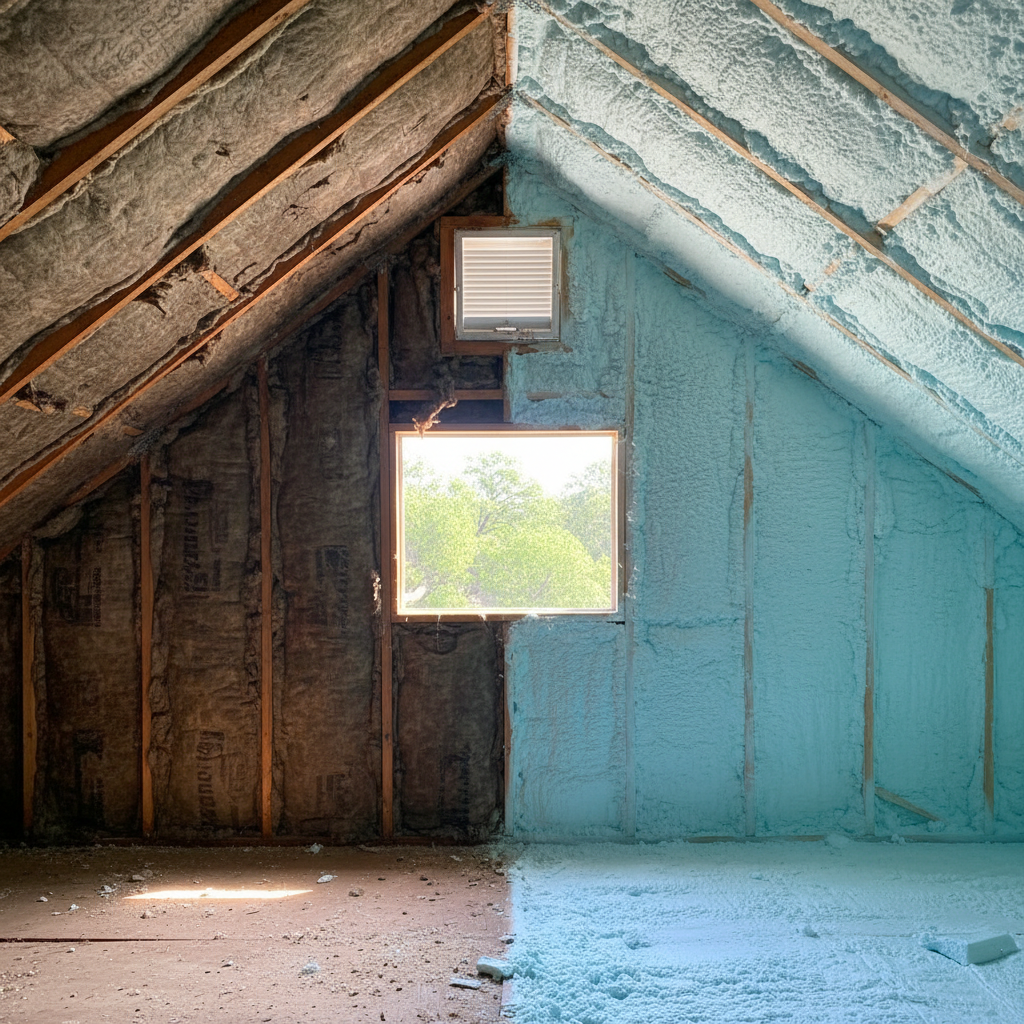
Alright, let's talk spray foam. Specifically, closed-cell spray foam. If you're looking at insulating your attic, walls, or crawl space here in Grand Prairie, you've probably heard about it. It's great stuff, no doubt about it. But then you start hearing about different ways to apply it: 'full fill' versus 'flash and batt.' What's the deal? Which one's right for your home? I'm gonna lay it out for you straight.
Full Closed-Cell Spray Foam: The Whole Nine Yards
When we talk about full closed-cell spray foam, we're talking about filling the entire cavity – whether it's a wall cavity, a ceiling, or under your subfloor – with nothing but closed-cell foam. We spray it in, it expands, and it cures into a dense, rigid barrier. Think of it like a custom-fit, solid shell around your home.
The Good Stuff:
- Top-Tier Performance: This is where closed-cell really shines. You get the highest R-value per inch compared to other insulation types. That means maximum thermal resistance. Your home stays cooler in our brutal Grand Prairie summers and warmer when those surprise winter freezes hit.
- Air and Vapor Barrier: Full closed-cell foam creates an incredible air seal. It stops drafts dead in their tracks, which is huge for energy efficiency. Plus, it's a vapor barrier, which is critical in our humid climate to prevent moisture issues inside your wall cavities.
- Structural Rigidity: Because it's so dense and adheres so well, it actually adds a bit of structural integrity to your walls. Not that your house is gonna fall down without it, but it's a nice bonus.
- Pest Resistant: Pests don't like it. They can't eat it, and they can't nest in it easily.
The Downside:
- Cost: Let's not beat around the bush. Full closed-cell spray foam is the most expensive option upfront. There's no getting around that. The material itself costs more, and it takes skilled pros to apply it correctly.
- Installation Complexity: It's a precise job. You need experienced technicians who know how to mix it right, apply it evenly, and handle the curing process. That's why you call a company like Oasis Insulation – we've got the expertise.
Flash and Batt: A Hybrid Approach
Now, flash and batt is a different animal. This method involves spraying a thinner layer – typically 1 to 2 inches – of closed-cell foam directly onto the sheathing or surface. This 'flash' layer acts as your air and vapor barrier. Once that's cured, we come back and fill the rest of the cavity with traditional fiberglass or mineral wool batt insulation.
The Good Stuff:
- Cost Savings: This is the main reason folks go with flash and batt. You get some of the benefits of spray foam without the full price tag, because you're using cheaper batt insulation for the bulk of the fill.
- Air and Vapor Seal: That initial 'flash' layer does a great job of sealing up air leaks and providing a vapor barrier. You still get a lot of the moisture control and draft prevention that closed-cell is known for.
- Decent R-Value: When combined, the flash layer and the batt insulation can achieve a pretty good overall R-value. It's usually better than just batt insulation alone.
The Downside:
- Lower Overall Performance: While good, it's not as good as full closed-cell. The R-value per inch is lower, and you don't get the same continuous, monolithic insulation envelope.
- Potential for Issues: If the batt insulation isn't installed perfectly – if it's compressed, gapped, or wet – you lose a lot of its effectiveness. And let's be real, batt insulation can settle over time, especially in wall cavities.
- Less Structural Benefit: You don't get the same rigidity boost as you do with full closed-cell.
- Thermal Bridging: While the foam helps, you still have more potential for thermal bridging through the studs or framing compared to a full closed-cell application that essentially wraps everything.
My Recommendation for Grand Prairie Homes
Look, if your budget allows for it, I'm always going to lean towards full closed-cell spray foam for homes here in Grand Prairie. Why? Our climate. We get scorching hot summers, high humidity, and occasional cold snaps. The energy savings you get from a truly airtight, high R-value system like full closed-cell foam will pay dividends over the life of your home.
Think about it: in neighborhoods like Dalworthington Gardens, where homes are often a bit older and sometimes have less-than-perfect framing, that full seal makes a huge difference. You're not just insulating; you're creating a robust, climate-controlled envelope that resists moisture, keeps pests out, and drastically cuts down on your utility bills. It's an investment, yes, but it's one that consistently delivers comfort and savings, especially when you're running your AC for six months straight.
Flash and batt is a decent compromise if budget is a major constraint, and it's certainly better than just batt insulation by itself. But if you want the absolute best performance, the most durable solution, and the maximum long-term energy savings for your Grand Prairie home, full closed-cell spray foam is the way to go. It's a premium product for a reason.
What About Maintenance and Appearance?
Honestly, once closed-cell spray foam is installed, whether it's full or flash and batt, there's virtually no maintenance required. It's not something you need to check on or replace. As for appearance, it's usually behind drywall or in an attic, so you won't see it anyway. The key is that it's installed correctly the first time.
So, when you're weighing your options, think about the long game. What's going to give you the most comfort, the most energy efficiency, and the best protection for your home in the long run? For most Grand Prairie homeowners, that answer points pretty clearly to full closed-cell spray foam.